
Why I Stopped Chasing Substack Subscribers –And What I Do Instead
Gaining 10,000+ subscribers on Substack confirmed my suspicion


Every content publisher I know wants the same three things:
A bigger car.
A bigger home.
And a bigger audience.
What about you?
Are you checking your Substack subscriber graph like it’s the stock market?
Does every new sub feel like a green candle going up? And every unsubscribe sting like a red one?
Maybe you’ve tweaked your posting schedule, tested new hooks, refreshed the page one more time — because watching the number climb feels like progress.
Hate to break it to you: it isn’t.
153,000 views = $0
I once had YouTube videos sitting at 153,000+ views that generated exactly zero customers.
Meanwhile, a handful of videos under 3,000 views brought in thousands of dollars in sales.
Same platform. Same effort. Wildly different outcomes.
That gap forced me to ask a better question. Not “how do I get more subscribers?” but “how do I keep attracting the right ones?”
Those are two completely different games.
And it’s not only YouTube.
I publish daily here on Substack. I also publish daily emails on my REAL newsletter.
And I built a newsletter analytics app that shows me where my revenue truly comes from.
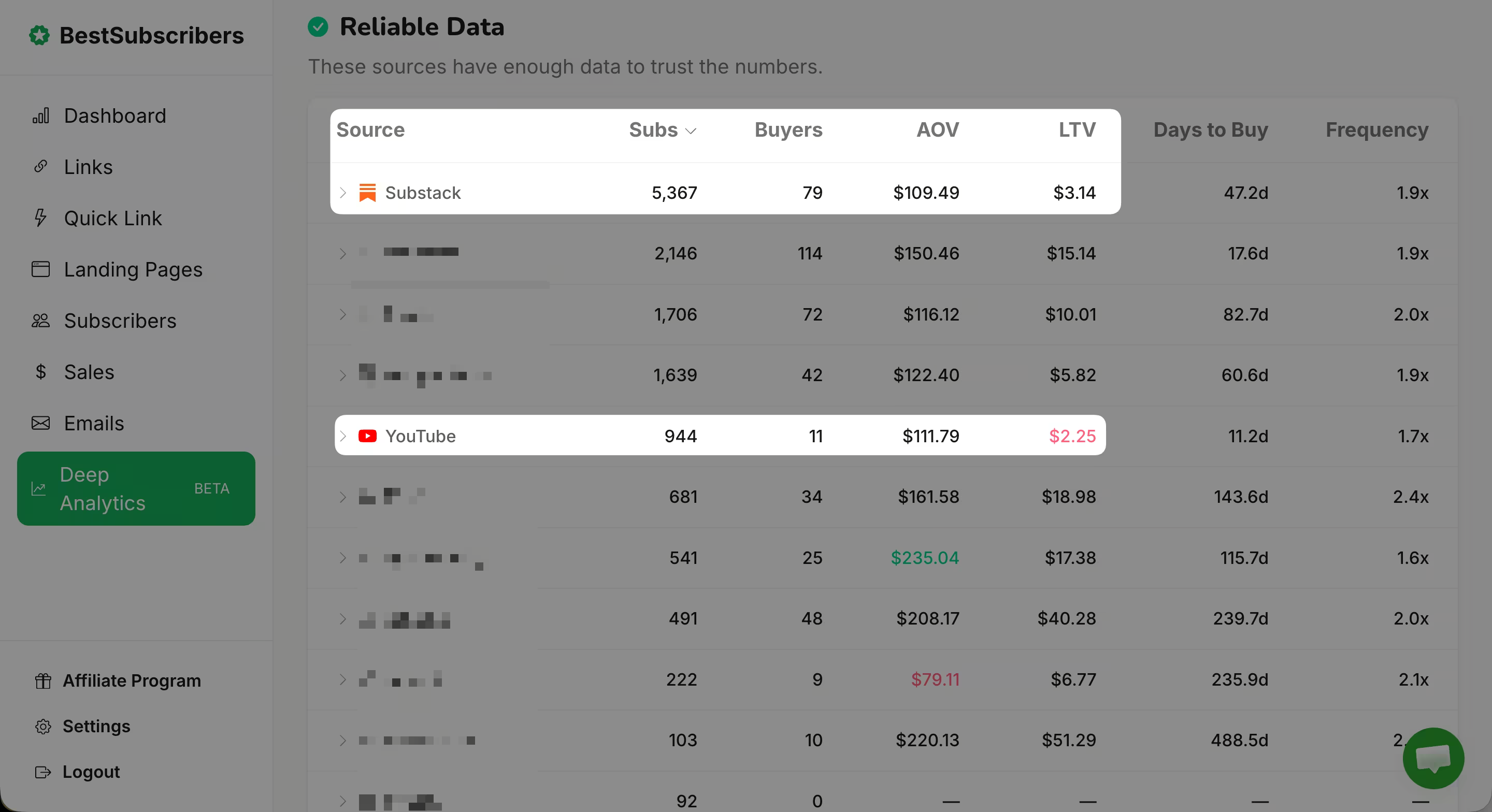
Substack has one of the lowest lifetime-value subscribers across all my channels.
So does YouTube. So do most mainstream platforms.
The reason?
These platforms are designed for discovery — which means they attract a lot of casual browsers. People who subscribe on impulse, skim a few posts, and never buy anything.
That’s not a flaw in your content. That’s how the algorithm works. It optimizes for attention, not intent.
Meanwhile, people who find me through a specific blog post or a targeted lead magnet tend to stick around — and spend money.
The size of your list is meaningless if it’s packed with people who were never going to buy.
How to attract subscribers who actually buy
I changed three things.
First, I got brutally specific about who I was talking to.
Instead of writing broad topics that could attract anyone, I carved out narrow angles inside my niche. Like building a second brain specifically for content creators.
Narrow? Yes. But narrow works like a filter.
I saw the exact same thing with a client. He runs a 7-figure ecom business and spent €23 million on Meta ads last year. He wanted to create content for ecom entrepreneurs chasing their first 7 figures. Sounds smart.
One problem: he’s a strategist. He doesn’t run day-to-day operations, doesn’t set up Shopify stores, doesn’t write ad copy. He has a team for that. His real skill is scaling businesses that already work.
Newbie store owners don’t care about scaling strategy. They want quick hacks to make their first sales. Wrong audience entirely for what he actually knows.
So we pivoted. He started targeting experienced store owners who already had traction and wanted to scale. Suddenly he was landing clients at $3,000+ a month.
Same guy. Same expertise. Different filter on who he attracted.
Second, I turned my lead magnet into a bouncer
My early lead magnets were broad. “How to take better notes and boost your creativity.” Sounds useful. Attracts everyone — including people who’ll never spend a cent.
So I got specific: “How to turn your notes into publishable content.”
See the difference? The first one appeals to anyone who owns a notebook. The second filters for people who actually want to create and publish — which is exactly who I sell to.
That one shift changed the quality of every subscriber who walked through the door. Instead of curiosity-browsers, I started getting people with a real goal and a real reason to eventually buy.
Third, I started selling from day one — and stopped apologizing for it.
This was the hardest shift.
I used to spend hours crafting free content, trying to “move the free line,” giving away as much as possible because that’s what every marketing guru preached. Give value. Build trust. Be generous. The money will follow.
Sounds noble. In practice, it just trained my audience to expect free stuff forever.
And every time I was about to launch something, I’d freeze up. Afraid of rejection. Afraid people would unsubscribe. Convinced that if I asked for a sale, all that hard-earned trust would collapse like a house of cards.
When I finally flipped the switch and started promoting offers early and often, the freebie-seekers bailed. And I let them.
One subscriber emailed me, furious that I was “emailing too much.” He’d been on my list for 86 days before realizing I wasn’t his guy. Good riddance.
That same week, someone else wrote: “I’ve been following you for a while and knew it was only a matter of time before I reached out. Your recipe works.”
That’s what a healthy list looks like..
Publishing daily will p*ss ‘em off
Last year in April, I went on a daily posting sprint on Substack.
Gained 1,060 new subscribers in 30 days.
I continued posting daily.
Then noticed that daily posting also made people unsubscribe:
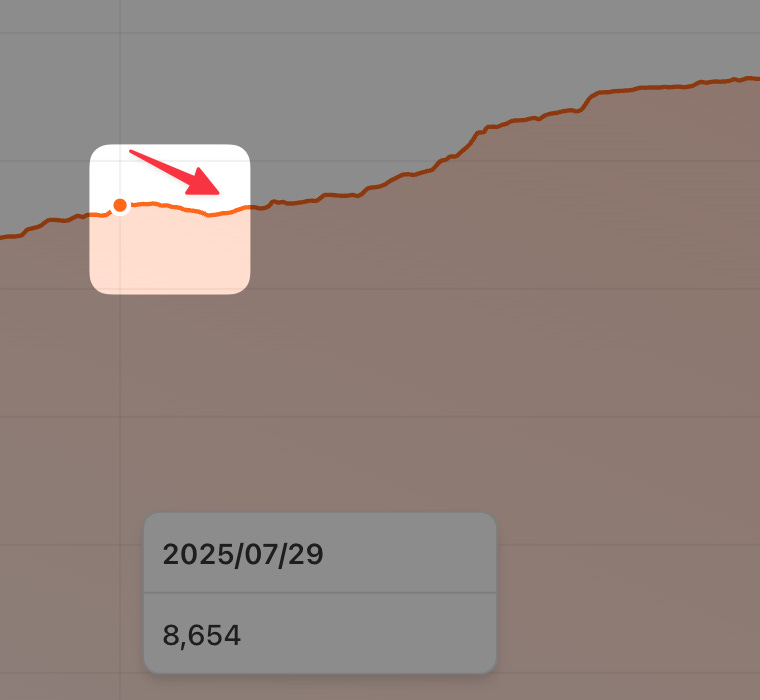
Most people would panic at the dip.
The ones who left subscribed too fast, realized I wasn’t their cup of tea, and bounced. That’s not failure — that’s the list self-cleaning.
You content strategy should not only be focused on GROWING. But most importantly: CURATING.
Each piece you push acts like a double-edged sword: it bonds the right people closer to you and repels the wrong ones.
The goal isn’t a fat number. It’s a tight list that actually wants what you sell.
The ugly part nobody talks about
Say you accept all of this. You know buyers matter more than browsers.
You still hit a wall: which content is bringing in the buyers?
I spent years trying to answer that. UTM parameters. Spreadsheets. Zapier automations held together with duct tape. And even with all of it, at least 30% of my revenue stayed completely untracked.
So I’d double down on whatever felt like it was working. High views, lots of likes — must be the good stuff, right?
Wrong.
Some of my quietest pieces — barely any comments, hardly any likes — were the ones quietly pulling in buyers. I’d have killed them off if I’d trusted the vanity metrics.
The scoreboard worth watching
So I stopped staring at subscriber counts and started tracking where buyers actually come from.
Which blog post brought in the person who later spent $500?
Which Substack note pulled in three buyers last month?
Which platform sends customers, and which one just sends tire-kickers?
That’s why I built a small app called BestSubscribers.
It tracks where every newsletter subscriber comes from and ties them back to real revenue — so you can finally see which content attracts clients and which content just collects applause.
You set it up once in about 15 minutes:
Link your autoresponder, your Stripe account, and paste a snippet onto your website.
After that it runs quietly in the background and gives you the right data to look at.
In a glance you can see where your subscribers come from and where your buyers come from.
Once you log into your dashboard you see something like this:
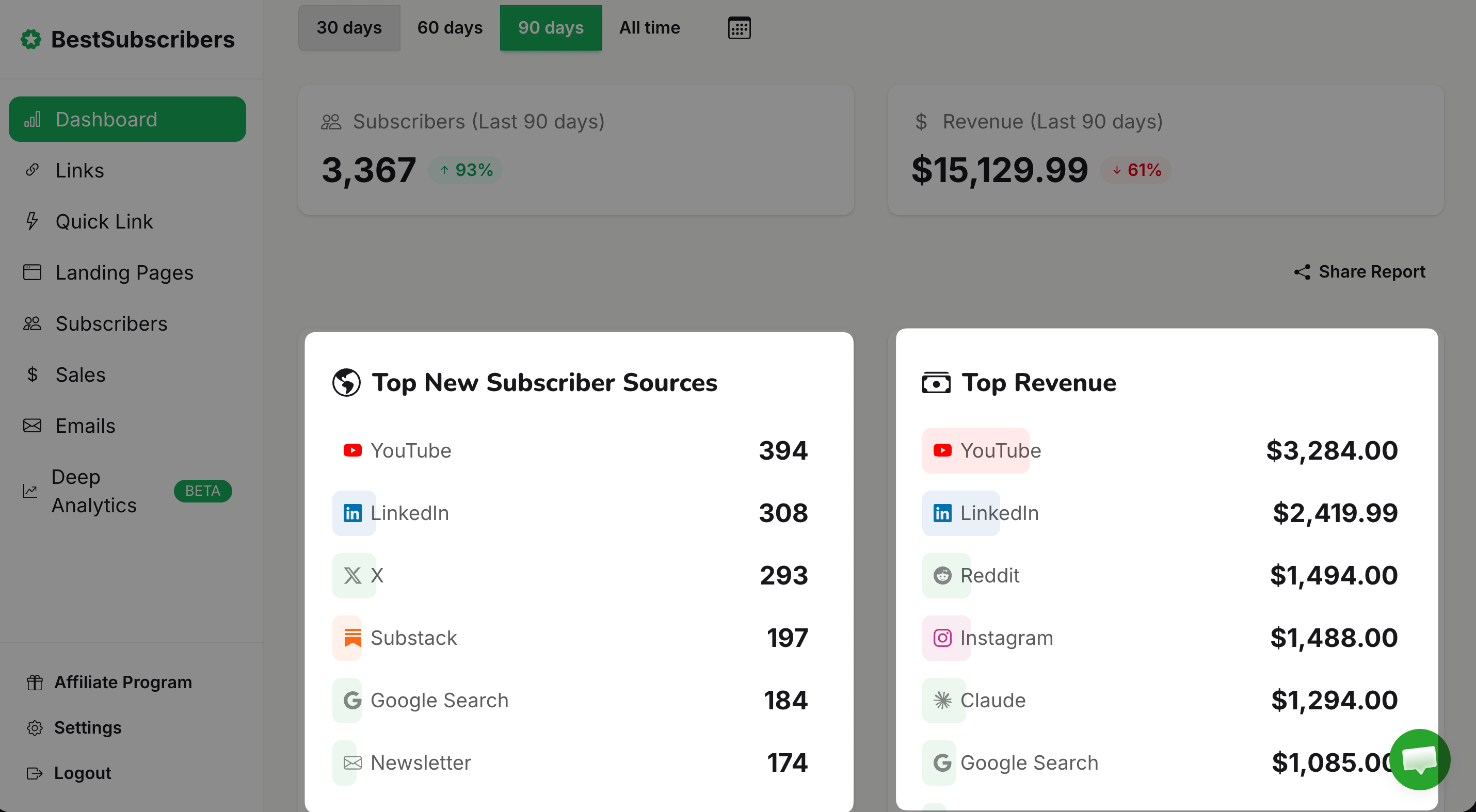
Take a look at the screenshot.
On the left, the vanity metrics — how many subscribers each platform sent you. The numbers you’ve been bragging about.
On the right, the money — how much revenue those subscribers actually spent.
And the first time you see them next to each other, your stomach drops a little.
In this example, X is pumping out subscribers like a fire hose. But barely making a dollar.
Reddit’s the opposite. Fewer subscribers than YouTube. But the revenue? Solid.
Now sit with what that means for a second.
If you’d only looked at the left column — like almost every creator does — you’d have poured your next month of mornings into X:
More posts.
More threads.
More chasing that climbing number.
And you’d have been feeding the channel that pays you the least, while starving the one quietly writing your checks.
That’s the trap.
Not that you’re lazy. Not that your content’s bad. You’re just aiming in the dark — pouring your limited hours into the loudest platform instead of the most profitable one.
You can’t fix what you can’t see.
It shows you exactly where to point the next hour you spend creating — so it actually moves the number that pays your mortgage, not the one that pads your ego.
I am a data girl, so this article was something I could munch on. So many of us just chasing the vanity numbers while we sleep on the numbers that count!
Time for me to make an audit like this!
Thank you for this post.
I’m new to this platform, publishing notes and articles, but so far it feels like I’m publishing to the void lol.